
Salesforce introduction

Salesforce is the No.1 customer relationship management (CRM) platform, supporting a variety of features such as statistical data extraction for sales, customer service, and marketing departments
Salesforce provides easy and fast speed, and is a solution optimized for customer needs.
Therefore, it is evaluated as a solution suitable for the rapidly changing IT era.
It also has features that can be used with various solutions such as Slack and Tableau.
Based on this, you can secure data connectivity at your customer touch points.
25%
Average earnings growth
30%
Increase marketing ROI
70%
Increased productivity
30%
Increase customer satisfaction
26%
IT cost reduction
Why do you need Salesforce?
Keeping abreast of up-to-date customer data is critical as businesses continue to operate.
Additionally, there is an increased need for sales teams to spend less time on administrative tasks to improve productivity.
As customer needs become more diverse in the modern world, tools to tailor and manage these customers are urgently needed.
Efficient collaboration and better decision-making within the company's sales/marketing departments have become necessary.
As a result, companies are turning to Salesforce to successfully manage large customers and support higher-level sales activities.

Increased need for easy access to up-to-date information about customers
(centralized customer data management)

Need for a data-driven, personalized customer interaction strategy

Need for better decision support through rich customer data analysis

Sales team needs to reduce time on simple management tasks

Efficient collaboration between sales, sales management, and marketing departments is required
Features

Domestic No.1 pharmaceutical CRM operation experience

Focus on 'How to use'

Approach based on understanding of CRM

Sustainable upgrade
Global Best Practice
Fast implementation
Field-centric CRM
Main Functions
Customer 360
Data related to customer needs can be grasped at a glance
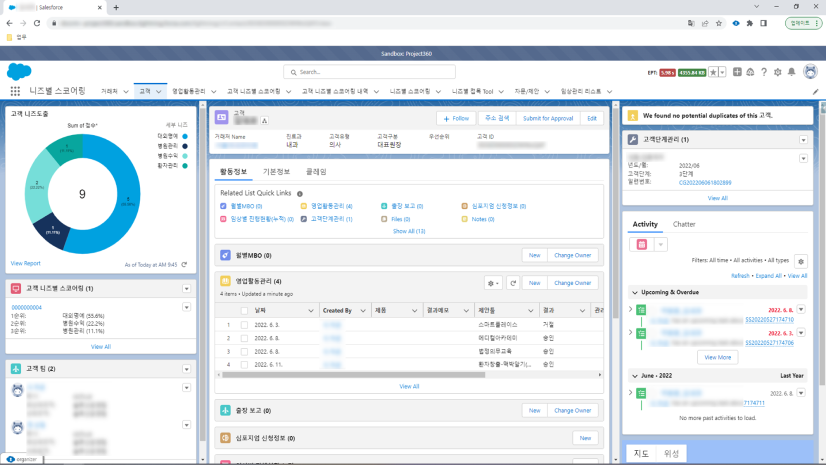
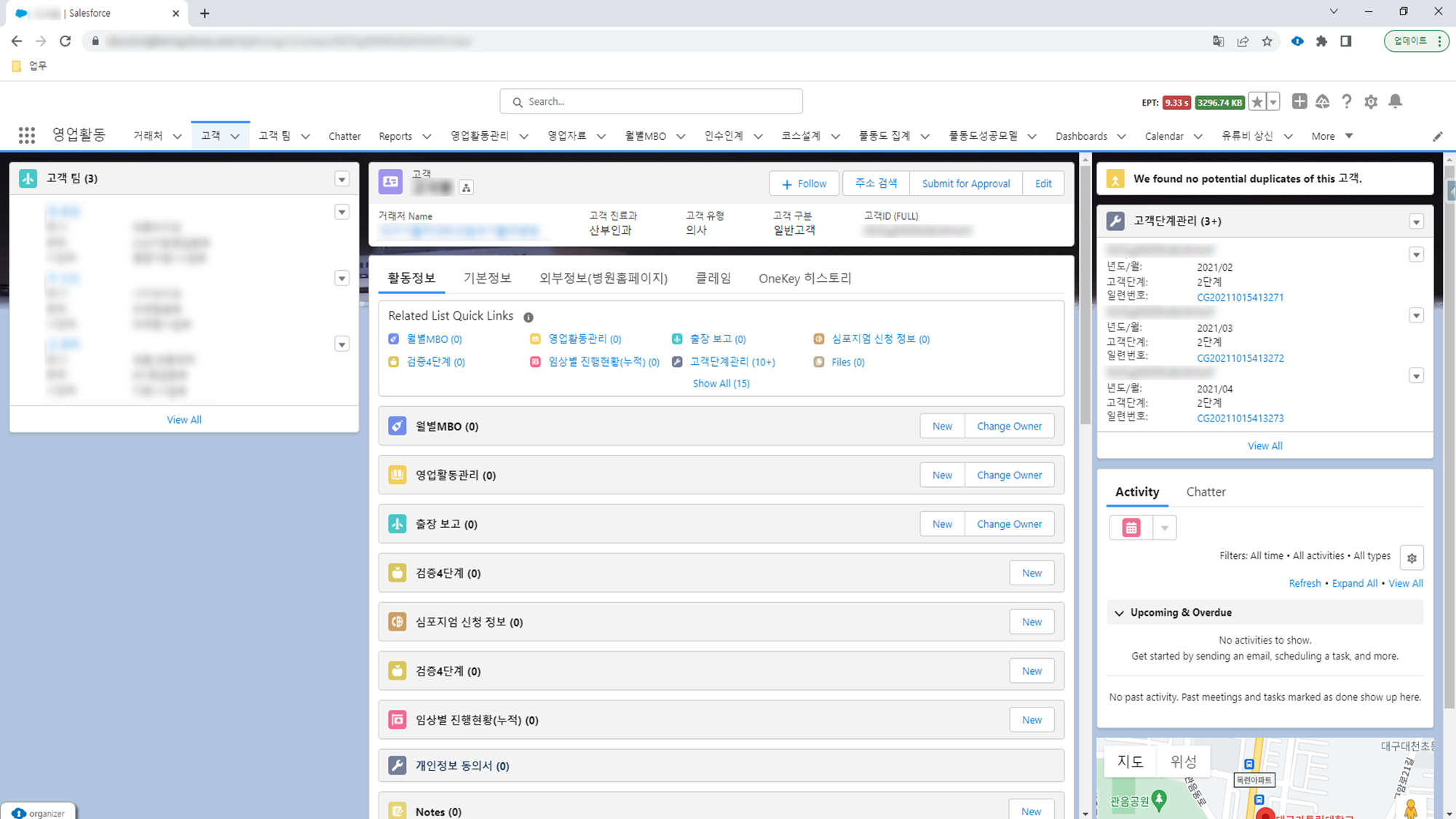
Sales activity management
Easy to understand the relevance and history of customer data
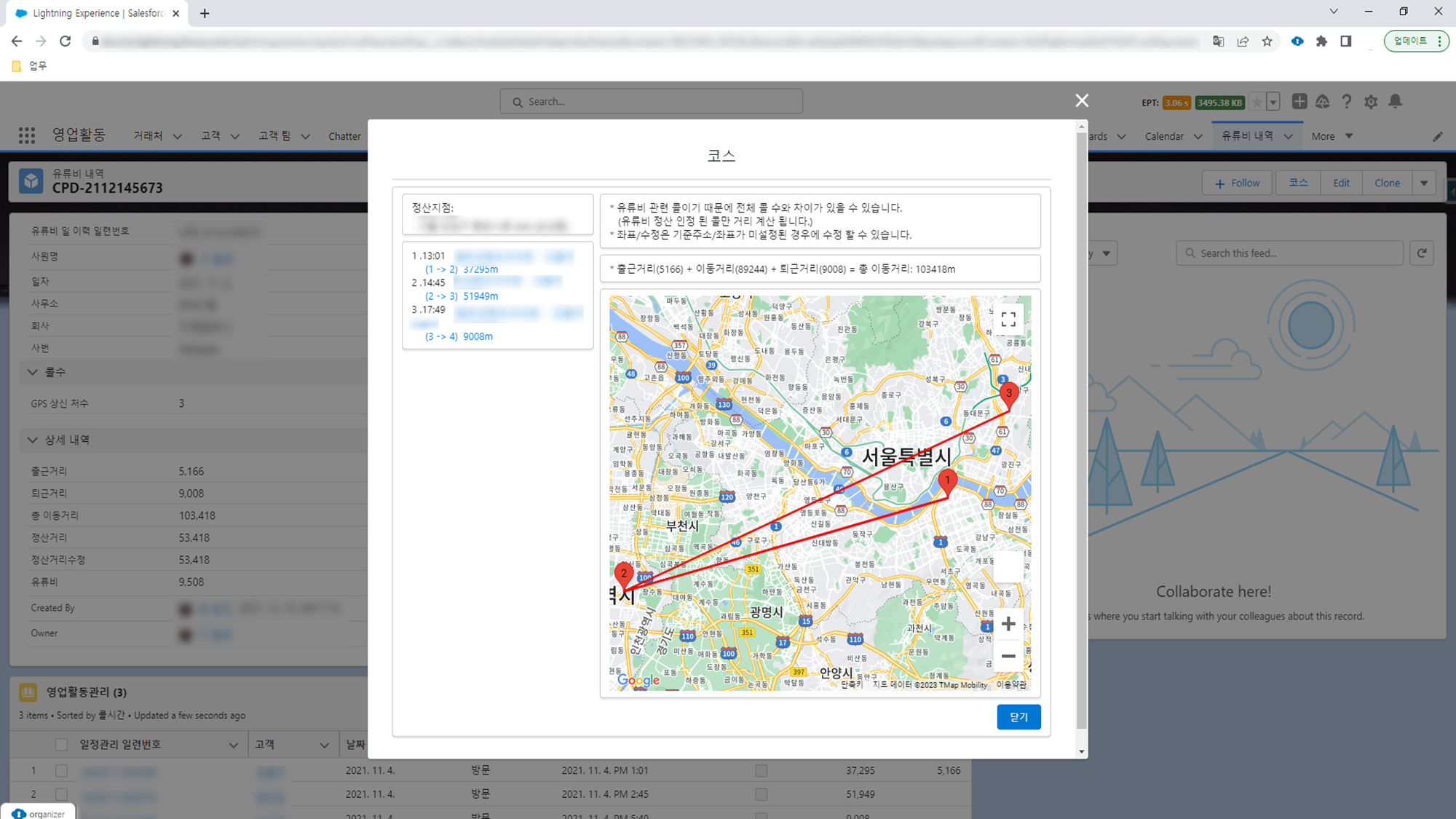
Easy to check movement route
Salesperson movements can be checked on a map
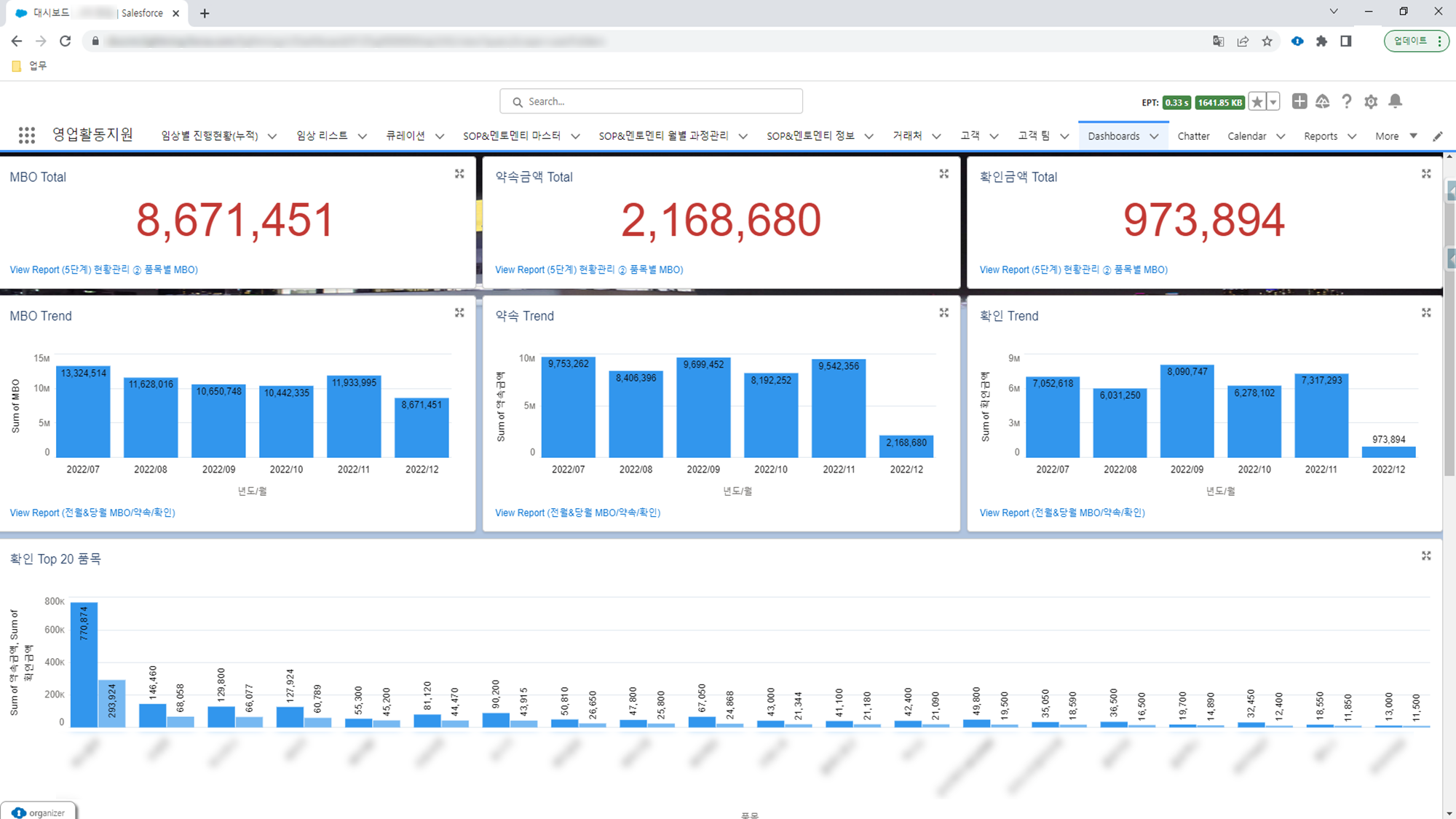
Dashboard by individual/department
Easy to understand data with a dashboard that combines multiple reports
Sales Data
Prompt customer response by referring to sales data by theme
Customer 360
데이터화된 고객의 니즈를 한 눈에 파악 가능
영업 활동 관리
고객 데이터의 연관성 및 히스토리 파악이 용이
콜 이동경로
영업사원의 이동 경로를 지도로 확인 가능
개별/부서별 대시보드
아래 Report를 결합한 대시보드로 데아터를 한 눈에 파악
영업자료
테마별 영업자료를 참고하여 신속한 고객 대응이 가능
Expected effects

Expected effects of using Salesforce
Expected effects differ depending on the position of the salesperson, sales manager, marketing department, company, and customer. What is clear is that various expected effects related to ‘sales’ activities are created.
For salespeople and sales managers, it is easy to establish a sales strategy by checking the sales activity history.
The marketing department is also better able to formulate marketing strategies, and the company becomes easier to manage customer information.
Customers can experience systematic customer management and feel high satisfaction.
Salesperson

Check sales activity history
Establish sales activity plan
Goal, performance management
Daily reporting lead time zero
Sales manager
Establish sales strategy
Sales activity coaching feedback
Live monitoring
Marketing department

Establish a marketing strategy
Discovering success cases / verification
Sales data management
Company

Cumulative management of account/customer information
Minimize salesperson turnover risk
Information sharing between companies /departments
Customer

Unified value customer experience
Systematic customer management
Increase customer satisfaction
Introduction case














FAQ
CMS and SEO
A good CMS can significantly impact your website's search engine optimization (SEO). Look for a CMS that offers SEO-friendly features such as customizable URLs, meta tags, and easy integration with analytics tools. Additionally, ensure that the CMS allows for the creation of mobile-responsive designs, as this is crucial for improving search rankings.

.svg)